


The Markets of India: Where the Country Truly Comes Alive
If you want to understand India, don’t start in a museum — start in a market.
India’s markets are not just places to shop; they are places to feel. The colours, the sounds, the conversations, the rhythm of daily life unfolding right in front of you. Every market tells a story, and every visit invites you to step a little deeper into the soul of the country.
Walking through an Indian market is a full sensory experience. The scent of cardamom and cumin floats through the air, bangles clink softly as women pass by, vendors call out with warm smiles, and piles of fabric shimmer in silks, cottons, and hand-block prints. It’s busy, yes — but never chaotic once you surrender to it

More Than Shopping — It’s Connection
What I love most is that markets in India are deeply human spaces. You don’t just buy something; you exchange a smile, share a laugh, practice a few words, hear a story. A shopkeeper might ask where you’re from, show you how something is made, or insist you sit for a moment and drink chai.
For many women on our Face 2 Face Tours, this is where a shift happens. Something softens. The hesitation disappears. Confidence grows. You realise you’re not just observing India — you’re participating in it.

Shopping in Delhi: A World in One City
The markets of Delhi are wonderfully diverse — each one offering a completely different experience.
Janpath Market
Janpath Market is colourful, vibrant, and full of energy. It’s the place for boho dresses, cotton kurtas, scarves, jewellery, and souvenirs. Here you’ll find beautiful fusion pieces — traditional fabrics reimagined for modern wear — and it’s also where many first-time visitors learn the gentle art of bargaining in a friendly, relaxed way.
Janpath Market
Paharganj, near Main Bazaar, feels raw and real. It’s known for affordable clothing, embroidered bags, shawls, cotton trousers, leather journals, and travel-friendly finds. This is where global travellers and local traders meet, and where you uncover unique, slightly eclectic treasures that feel collected rather than curated.
Connaught Place
Connaught Place offers a more polished experience. Set among colonial architecture, it’s ideal for fixed-price shopping, well-known Indian brands, bookshops, cafés, and classic stores. It’s a calm, spacious contrast to the street markets and easy to explore.
Dilli Haat
Then there is Dilli Haat, a favourite for many of our ladies. This open-air, government-supported craft market brings together artisans from across India in one space. Each stall represents a different state, offering handwoven textiles, block-printed bedding, tribal jewellery, wooden crafts, pottery, and regional foods.
What makes Dilli Haat special is knowing that your purchases directly support traditional crafts and the communities behind them.
Jaipur: Textiles, Jewellery, and Living Craft
Jaipur, the Pink City, is a treasure chest for lovers of craftsmanship.
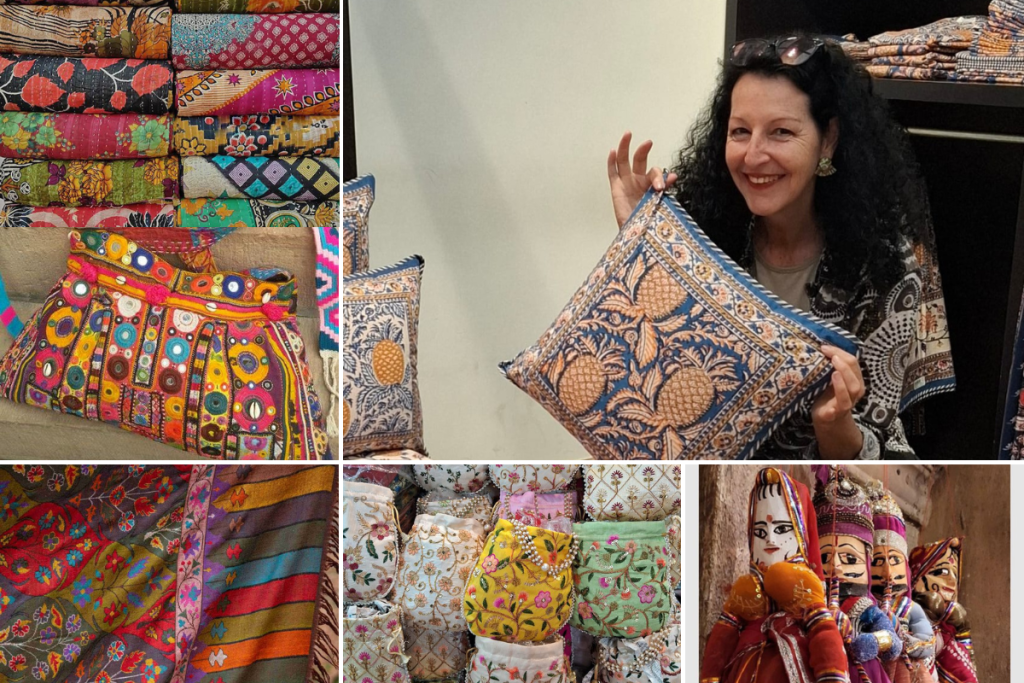
The city is world-famous for block-printed textiles, created using hand-carved wooden blocks dipped in natural dyes. These prints appear in clothing, scarves, table linen, and especially bedding — quilts, bedspreads, and cushion covers that feel both artistic and timeless. Each piece carries small imperfections that remind you it was made by hand, not machine.
Jaipur is also one of India’s most important centres for precious and semi-precious jewellery. From silver set with turquoise, moonstone, and garnet, to colourful gemstone earrings and rings, the designs are rich in heritage yet easy to wear. Many pieces reflect ancient techniques passed down through generations.
Another standout is leather craftsmanship. Jaipur is known for beautifully made leather shoes, sandals, bags, and belts — often decorated with hand embroidery, mirror work, or stitching. These pieces blend practicality with artistry and are favourites for travellers wanting something both useful and unique.
From Tribal Roots to Modern Treasures
One of the most beautiful aspects of shopping in India is seeing how tribal textiles and traditional dress are transformed into modern pieces.
Old saris and regional garments are lovingly repurposed into bedding, throws, jackets, skirts, and cushions. The result is layered, soulful pieces that carry history within their threads.
Particularly loved are kanthas — hand-stitched quilts traditionally made by women using recycled fabric. Each kantha tells a quiet story through its stitching, colours, and patterns. No two are ever the same.
You’ll also find tribal bags and accessories, rich with embroidery, mirrors, and symbolic motifs. These pieces celebrate India’s rural and indigenous communities, giving new life to age-old skills while supporting sustainable, slow fashion.

You Don’t Leave the Same
You may come home with a scarf, bedding, jewellery, or a leather bag — but what you really take with you is confidence, awareness, and a deeper connection to the world.
India’s markets don’t just change what’s in your suitcase.
They change something inside you.
Come and see the real India with me — not from behind a bus window, but face to face.
For more behind-the-scenes moments, photos, and memories from our past Incredible India visits and ladies-only tours, follow us on social media:
Facebook : https://www.facebook.com/face2facebreakawaysretreats
Instagram: https://www.instagram.com/f2f_tours_breakaways_retreats/
Our next tour to India: https://www.face2facetours.co.za/morocco/